Posted on July 4, 2025
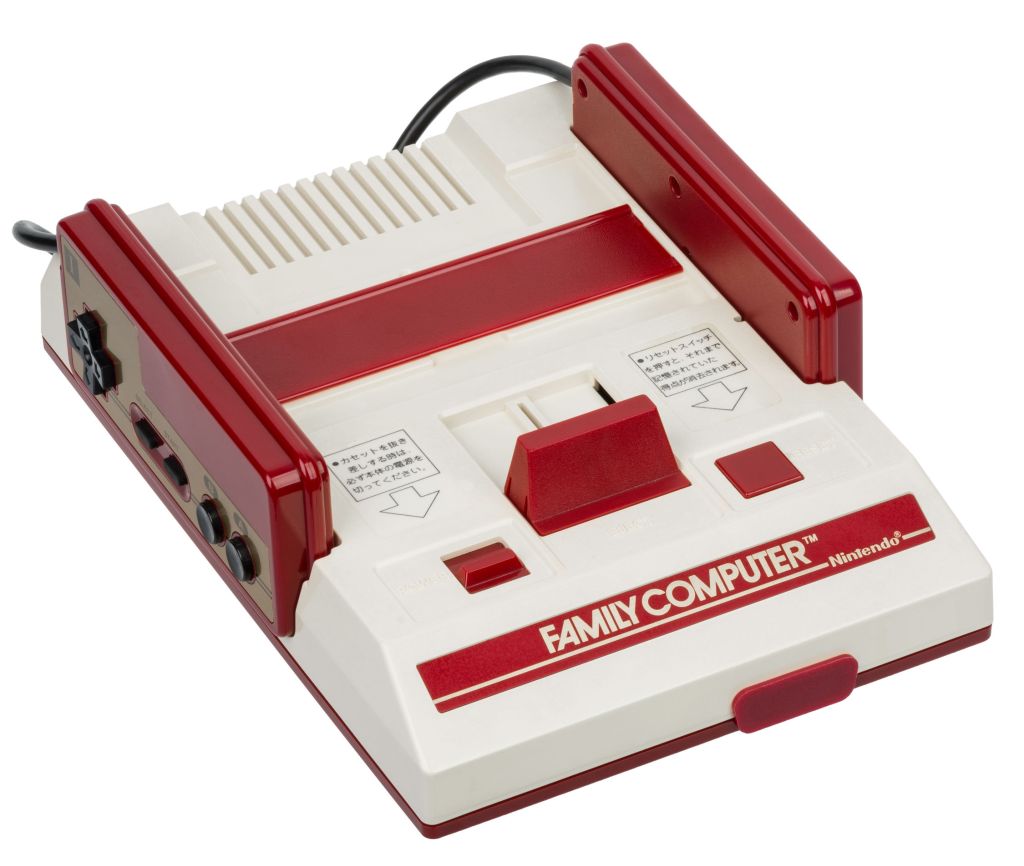
The history of Nintendo goes all the way back to 1889 when a then 30-year-old Fusajirou Yamauchi opened a factory for handmade Hanafuda playing cards. These had seen increased demand after the gambling laws had been relaxed in 1885 by the Meiji government. However, these handmade card decks were very expensive which limited the potential customer base. To counter this, Fusajirou shifted towards selling cheap card decks to gambling parlors since they would throw away a deck after just a single use. This meant that Fusajirou could potentially sell about 50 cheap card decks to each gambling parlor. It is wildly ironic to me that the family-friendly Nintendo had initially deep ties to the gambling industry.
For the next 70 something years, Nintendo would continue to sell various kinds of cards with which they had decent success. But eventually the market was saturated and it became evident that producing cards alone could no longer sustain Nintendo. Therefore, they started experimenting with toys around 1965. In the same year they had also hired an electronics graduate by the name of Gunpei Yokoi to maintain their assembly-line machines for Hanafuda cards. During his spare time, he had worked on an extending arm that the then president Hiroshi Yamauchi had noticed while inspecting the factory. He ordered the young mechanic to turn the extending arm into a proper product so that it could be sold for the upcoming Christmas season. This toy released in 1966 as the Ultra Hand and was a very successful release for Nintendo. It reportedly sold over a million units. If you want to learn more about the Ultra Hand and a whole slew of other Nintendo toys from this era of the company, I can recommend to you the blog Nintendo before Mario: http://blog.beforemario.com/2011/03/nintendo-ultra-hand-1966.html
Despite this early success, Nintendo was still struggling to find their new identity and branding as they were also releasing all sorts of other products, like a copy machine called Copilas or even a baby car going by the name of Mamaberica!
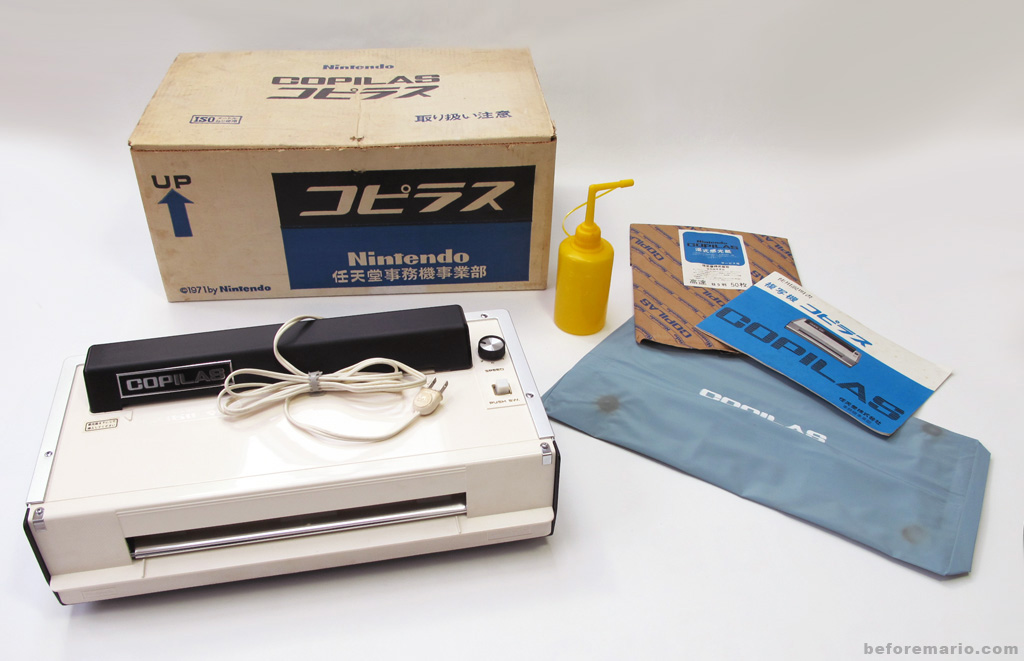
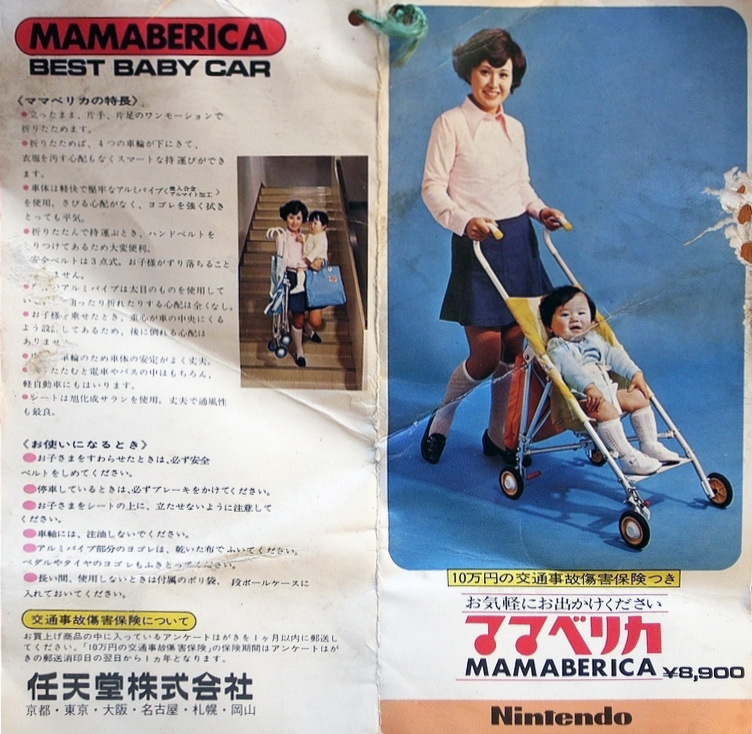
This is exemplary of the lack of focus and the lack of a unifying vision at Nintendo in the 60s and 70s. The development staff of Nintendo would each work on their own to create new products, and if it seemed like a viable product, it would get made. One emerging sector that they were eyeing was the market for pocket calculators which had just become affordable for the average consumer. However, it seemed like Nintendo arrived to late to the party. Many manufacturers had already started selling their devices, and were even competing to sell devices for less than 10,000 Yen. Nintendo did not think that they could compete in this market and backed out. But a pocket calculator would later play an essential role for developing the Game & Watch line (1980 and beyond), when Gunpei Yokoi was riding a Shinkansen where he saw a bored businessman playing with an LCD calculator. This gave him the inspiration for portable gaming devices.
Going back to the 70s. Nintendo was expanding its portfolio by also producing arcade devices, like the Laser Clay Shooting System from 1973. Nintendo had partnered up with Mitsubishi Electronics for this device who then afterwards approached Nintendo saying that they had LSIs suitable for TV game machine that could display color, and they were asking if Nintendo wanted to turn them into commercial product. Masayuki Uemura was interesting in developing such a device since no color TV game had been on the Japanese market at that time. This eventually led to the development of the Color TV-Game 6, which was launched on June 1, 1977 for 9,800 Yen, and the Color TV-Game 15 which released only a week later and retailed for 15,000 Yen.
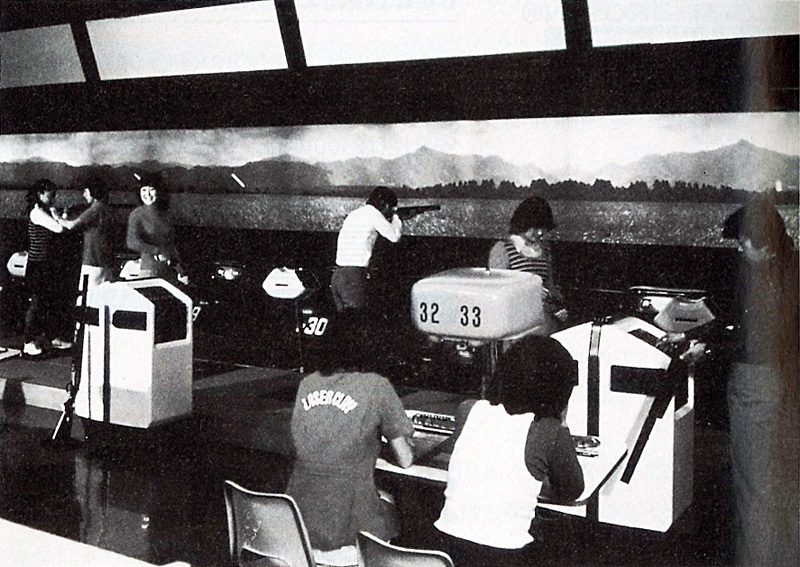
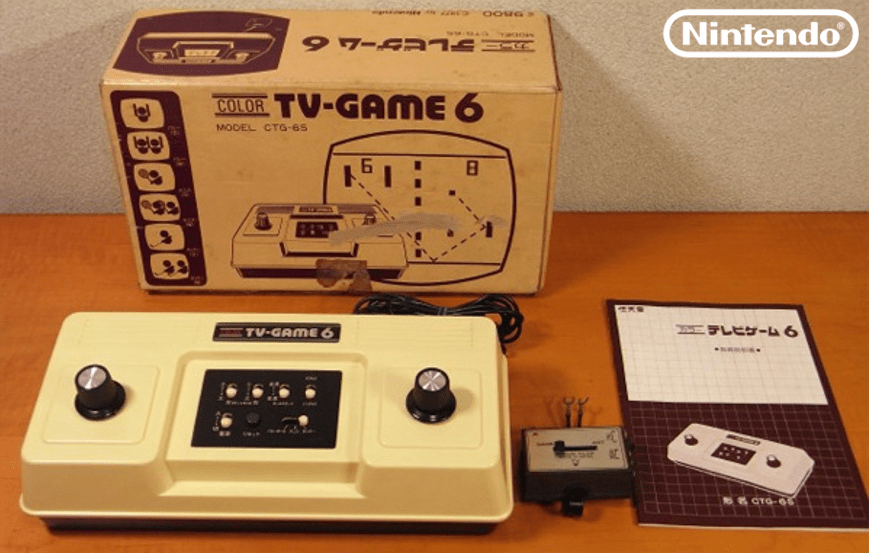
In the following year Nintendo released the Color TV-Game Racing 112 and the year after that (1979) Block Kuzushi, which was a dedicated Breakout console. Nintendo used their cooperation with Mitsubishi Electronics to send some of their staff there so that they could learn how to build breadboards themselves. The first Color TV-Game was still based on already pre-designed LSIs, but with their third game, Block Kuzushi, they managed to create the Breadboard all by themselves for the first time, even if they had to still bring the final circuit diagram to Mitsubishi Electronics to have them check it. Now that they have learned the ropes, they wanted to continue to design consoles dedicated to single arcade games and designed with their specialized LSIs. However, with the arrival of Space Invaders later in 1979 the era of game devices with specialized LSIs came to an end as they were replaced by micro processors. This is also the reason why the Computer TV-Game (1980), a dedicated device for playing Othello, was the final release in this product line. In the future they would eventually build a device that could play different games by switching cartridges instead of buying a completely new console, the Family Computer.
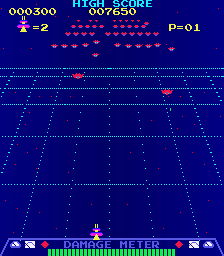
But before that Nintendo had still some ways to go. Around 1980 they had their Research & Development No.1 Department work on portable gaming devices in form of the Game & Watch, while the R&D2 Department switched their focus towards arcade games. One of their games was 1979’s Space Fever which was a blatant Space Invaders rip-off with only some minor alterations. In 1980 they followed up with Radar Scope that was inspired by Namco’s Galaxian which itself was an evolution of Space Invaders. The new technological advancement of Galaxian was that it was the first game that used tile-based hardware allowing for sprites to be displayed and for the background to be scrolled. Nintendo’s Uemura was shocked when he saw the new technology: many characters could be displayed and they were able to move around quickly. On top of that, the background moved creating the illusion of stars moving in the distance. It is not difficult to see the similarities to Radar Scope, which showed more originality instead of ripping off another game almost one-to-one. But despite that, Radar Scope sold poorly and Nintendo was sitting on roughly 2,000 unsold arcade machines in their warehouse. As is famously known, the hardware for this game would be repurposed into Donkey Kong (1981), Nintendo’s first international smash hit.
In October of 1981 Nintendo’s president Hiroshi Yamauchi approached Nakagawa and asked him to create a game device for use at home. Uemura gathered the remaining engineers from R&D2 Department and got to work. The console would be developed under the codename GAMECOM and was inspired by the ColecoVision. This was due to an employee of Coleco visiting Nintendo and showing off their console. The engineers of R&D2 were impressed by the smooth movements and one of them, Takao Sawano had even taken the console home to show it to his parents who were amazed by the technology. Therefore, the Famicom was not developed with the Atari 2600 in mind, but the ColecoVision! Sawano also proved to be crucial to the success of the console in some other unexpected way. He started off working at R&D2, but got transferred to R&D1 to help with the Game & Watch devices. While working on the Game & Watches he saw that they had invented a directional pad, i.e. the D-pad, for moving the game’s character around. He would take this idea with him and suggest it for Nintendo’s new home console.
The actual development of the device started as late as June 1982, and for the first three months they did not even have a concrete idea of what the finished product should be like. Instead, Uemura sent two member of his team, Katsuya Nakagawa and Masahiro Ōtake to the semiconductor manufacturer Ricoh to come up with the specifications. All they had to work with was one of their arcade machines with Donkey Kong. They wanted their device to be more powerful than the Atari 2600 and the ColecoVision as they wished for a more arcade-like experience.
Initially, the Nintendo engineers wanted a Z80 for their home console since they were used to developing for it from their arcade machines. But their contacts at Ricoh recommended them the 6502, because they had the rights to it from Rockwell, but also because it was smaller and thus cheaper. Furthermore, it was much smaller than the Z80 and required about one fourth of the space, so that Nintendo could use that space for their own custom chips. The 6502 was also fairly uncommon in Japan, so other companies would take longer to copy it. For these reasons Uemura decided to go with the 6502 instead of the Z80.
However, there was one big problem with the new chip: Nintendo’s developers did not have the proper development tools and did not know how to work with this chip. Therefore, development of the games, which started in late 1982, took longer than expected. Their problems would be solved by a new hire in April 1983. Shuuhei Katou was in a micro computer club at his university where he became very familiar with the 6502. He learned programming with on old arcade board, that had a 6502 equipped. So, when he arrived at Nintendo, he was not a newbie who had to be coached and taught. Instead, he showed everyone else how to operate the 6502, and basically became their “living manual”. Thanks to him the game development progressed much faster.
There is still more to discuss, and more interesting tidbits to share, but I will do this another time, because this article has already become much longer than I had anticipated. I will also return to just talking about video games pretty soon, since I have recently spent a lot fo time with many different versions of Donkey Kong. So, look forward to that as well!
 RetroGamingJapan
Leave a comment