Posted on June 26, 2025
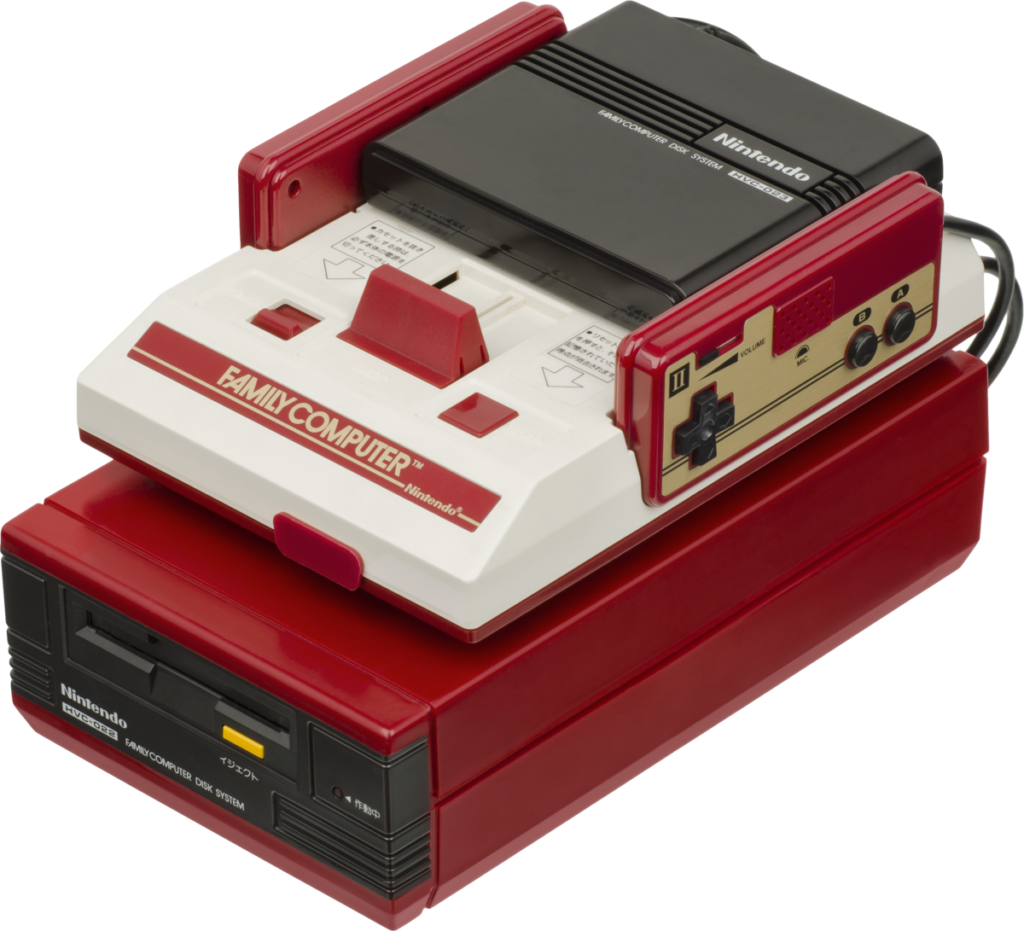
In the past few years, I have spent a lot of time playing and beating various games on the NES. The reason for that was me stumbling upon Nintendo Age during its final days and participating in the yearly NES challenge thread as well as the weekly NES competitions. I continued these after their move to Videogamesages and went absolutely wild in some of those years. The combination of playing NES games, that were completely new to me, and the competitive aspect really appealed to me. Over the years I have beaten over 200 NES and Famicom games for the first time and was happy with how deep I delved into that system’s library even though I have barely ever played NES games before.
My first exposure to the NES was in the late 90s at a friend’s house after we had exhausted every single game we had on the SNES, N64 and PC. That is why he dug out his old NES and the three games that he had. Those were Super Mario Bros., The Legend of Zelda and some kind of soccer game. I was not interested in Super Mario Bros. on the NES because I had already played enough SMB games on the All-Stars collection on the SNES. The soccer game was mildly fun, but not due to its captivating and realistic gameplay. No. We had much more fun fouling the played from the other team and getting them off the playing field. We tried to get rid of every other player except for the goalkeeper. It never quite worked out, but it still made for a nice little time waster.
As for The Legend of Zelda, you might be surprised to hear that I initially really hated this game. My only exposure up to this point was A Link to the Past, Link’s Awakening and Ocarina of Time. So, imagine going from these absolutely amazing games to the very first entry in the series. Holy smokes! The difference was night and day! It felt so clunky and was difficult, too. We did not have the manual and did not think of looking up tips on the internet, so we tried to beat it all by ourselves. I do not know if we ever managed to do that, but I remember not enjoying the process at all. Usually, we would switch controllers and each play for a little. However, with this game I did not want to play myself. I mostly sat beside him and tried to come up with ideas on how to progress.
After this I never really played the NES for the next 15+ years or so. Over the coming years I would still go back to play SNES games or Super Famicom games with fan translations or the occasional PS1 RPG that missed out on. But I never really went back to the NES again until the NES Classic Mini came out in 2016. By that time, I was already getting into retro gaming and wanting to learn more about gaming history, including the truly old stuff like the Atari 2600 or the Philips Videopac 7000, a.k.a. the Odyssey II in North America. But the NES held a special position, because it was still old-school, while at the same time being more sophisticated and interesting than the Gen II consoles. Either way, I only played some games randomly on the NES Classic Mini, but eventually stopped. That is, until I stumbled upon the aforementioned NintendoAge.
Before I didn’t have the patience for most of those old games, but when I tried them during that time, I did not mind the quirks of these games as much which seemed quite weird to me. The jump back from the SNES/N64 to the NES was more jarring to me than going back from the PS3/Wii U to the NES. Or maybe it way my age and that I became more patient. Most people seem to be performing worse at these retro games the older they get, but for me it was somehow the opposite. Patience and pattern recognition really pay off in these old-school games.
Anyway, since I had already been playing so many NES games over the past few years I had wanted to maybe try and beat every single game released in North America, like the Mexican Runner and Kelsy Polnik. Unfortunately, many NES games are brutally difficult and probably impossible for me to beat legitimately. That was when I came up with the idea for this quest. It combines the challenge of beating an entire console’s library while also giving it a slightly different spin. After all, the US NES library has already been beaten multiple times and discussed to death. But by focusing on the Japanese library, I might be able to offer some new insights. I also speak Japanese, so the language barrier is not really an obstacle for me, which allows me to play text-heavy games that haven’t been translated yet. That being said, I will not require every game to be beaten “legitimately”. I just want to experience these games and get an understanding of them without having to spend months or years on certain overly difficult and frustrating games. Of course, I will always mention if a game was beaten legitimately or with help. See more for the rules section.
Rules of the Challenge
Beating a game, playing through a game, finishing a game, seeing a game until the end, or completing a game …
These are all similar terms, but they carry different associations with them. Especially with such old games the definition of beating a game or winning at a game can get very muddy. Kelsy Polnik did a very nice and comprehensive video about all the nuances that go into defining a win condition. You can see the full video here:
It should be obvious that defining a win condition is really complicated with this many games. There will be times when it becomes hard to tell what counts as beaten. As such my goal is not to beat or complete every single game without any help. Instead, I want to play and experience the games for so long that I can form an opinion on them. I will still try to “beat” them, but I leave the option for me to use save states or similar help to see more of the game. If I use any help like this, I will notate it! I might also return to a game later during the journey. So even I did not clear it at the time of writing the blog entry for it, I might return to it and finish it later legitimately. For the more concrete win conditions I will borrow from Videogamesages since these seem to be the most reasonable:
- A game only counts as truly beaten, if it was done legit, i.e. without save states, fast forwarding, rewinding, cheats etc.
- Emulators and Everdrives are allowed if the above functions are not being used
- No turbo controllers or other peripherals that offer an advantage.
- Continues, passwords and codes are allowed, if, and only if, the game or the manual provides them. The Konami code or the ABBA code in Ikari Warriors therefore are not allowed, even if they are widely known because they are not something that the game provides to you on its own, but requires external knowledge instead.
- Games with no ending that loop endlessly are considered to be beaten if the high score is surpassed and if the game just repeats without any new content.
- The best ending is not required, but a bad ending should be avoided.
- However, if some content of a game is locked behind a higher difficulty or certain conditions, then that difficulty must be beaten or the conditions be met, e.g. Double Dragon 2 and Isolated Warrior.
As you can see there are a lot of stipulations for what constitutes beating a game. These also make certain games unreasonably difficult which is why I will not necessarily beat every single game legitimately, but I will try regardless and I might return to certain games. Either way it should still be possible to review these games and maybe rank them. I will try to do that as I go. If you have read until here, you have my dearest thanks. If you have some suggestions, feel free to leave me a comment. I hope that this will be fun and that I can find some hidden gems among the Famicom library.
 RetroGamingJapan
Leave a comment